Sustainability

Regenerative biorefining—engineered for scale
chatgpt image jan 30, 2026, 12 03 08 am

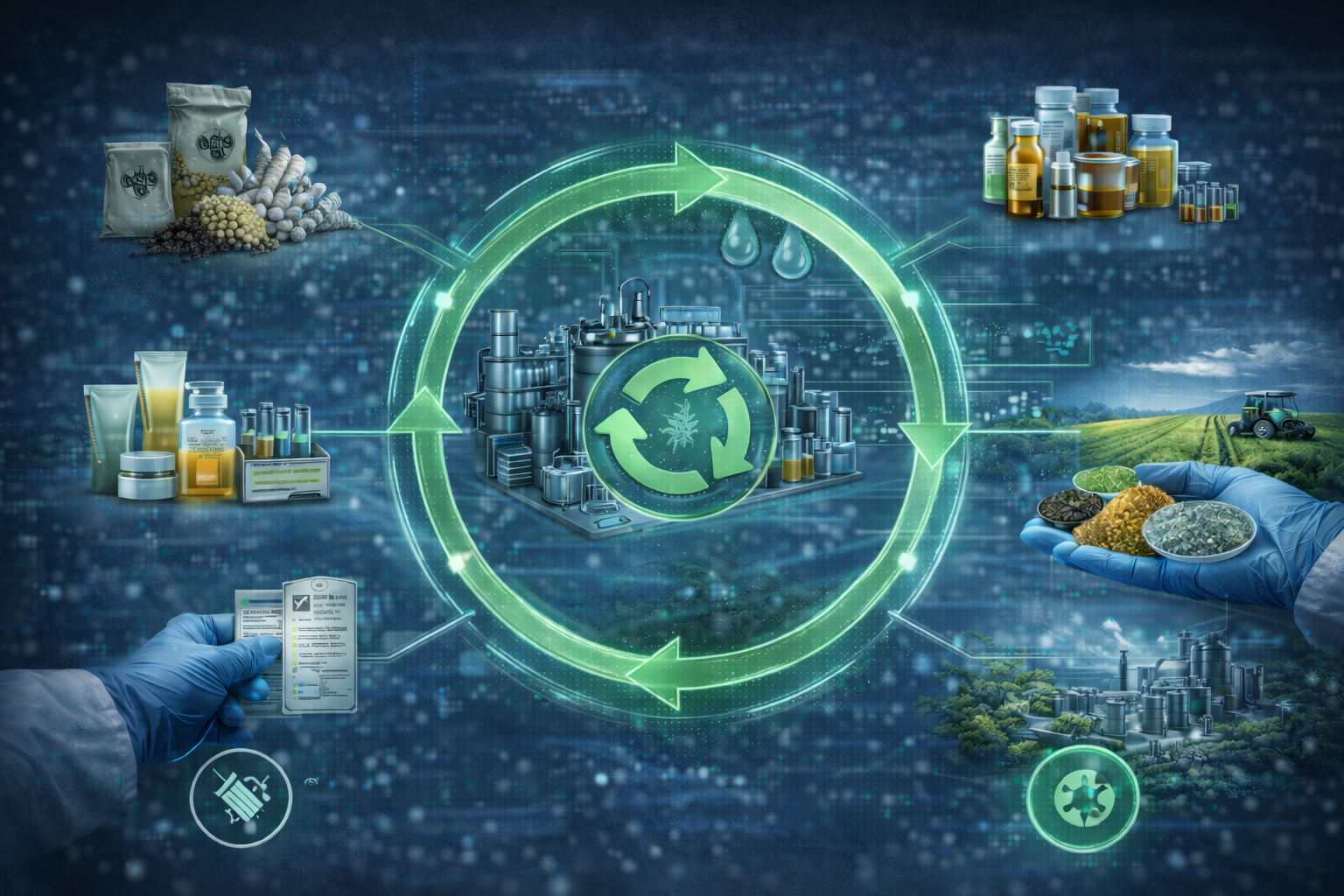
Renova BioRefinery Circularity principle

We design for full valorization: maximize conversion of each incoming biomass stream into products and co-products, while recovering solvents and reusing water wherever feasible. In circular-economy terms, we aim to keep resources in use, design out waste and pollution, and regenerate value through the biological cycle – measured, improved, and auditable.

Zero-waste approach

We engineer routes for near–zero-waste performance by design—treating co-products as value streams, closing solvent and water loops, evaluating heat-integration early, and characterizing effluents upfront to minimize treatment risk, cost, and environmental impact.
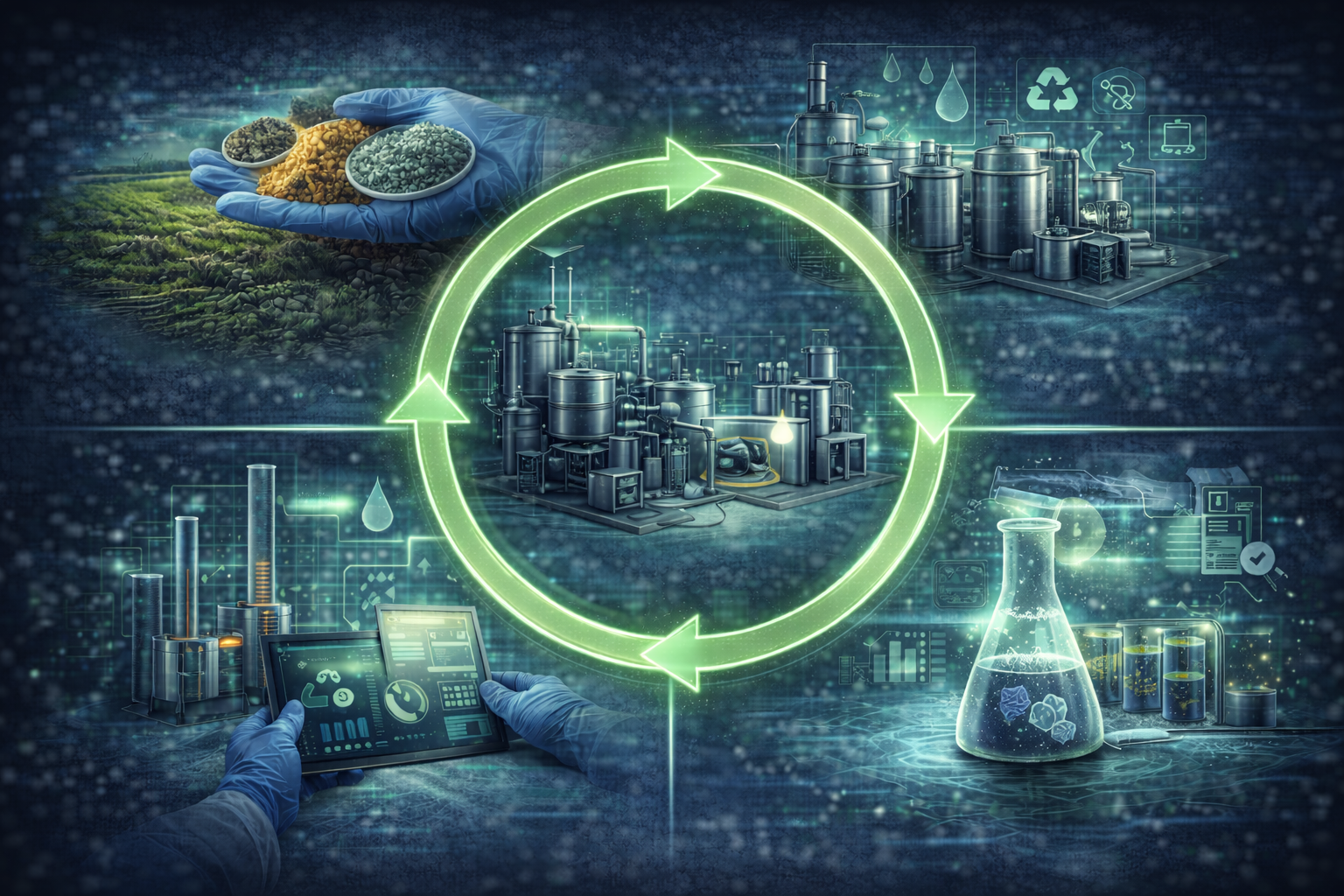
  • Co-product design: nutrient-rich streams are stabilized for productive use rather than disposed
  • Solvent recovery and reuse: closed-loop concepts to reduce chemical intensity and cost
  • Water and energy discipline: reuse loops and heat-integration options evaluated during process design
  • Effluent reduction: early characterization of salt loads and wastewater to prevent downstream surprises
chatgpt image jan 30, 2026, 12 28 00 am

chatgpt image jan 30, 2026, 12 14 05 am

Impact metrics (Not yet available)

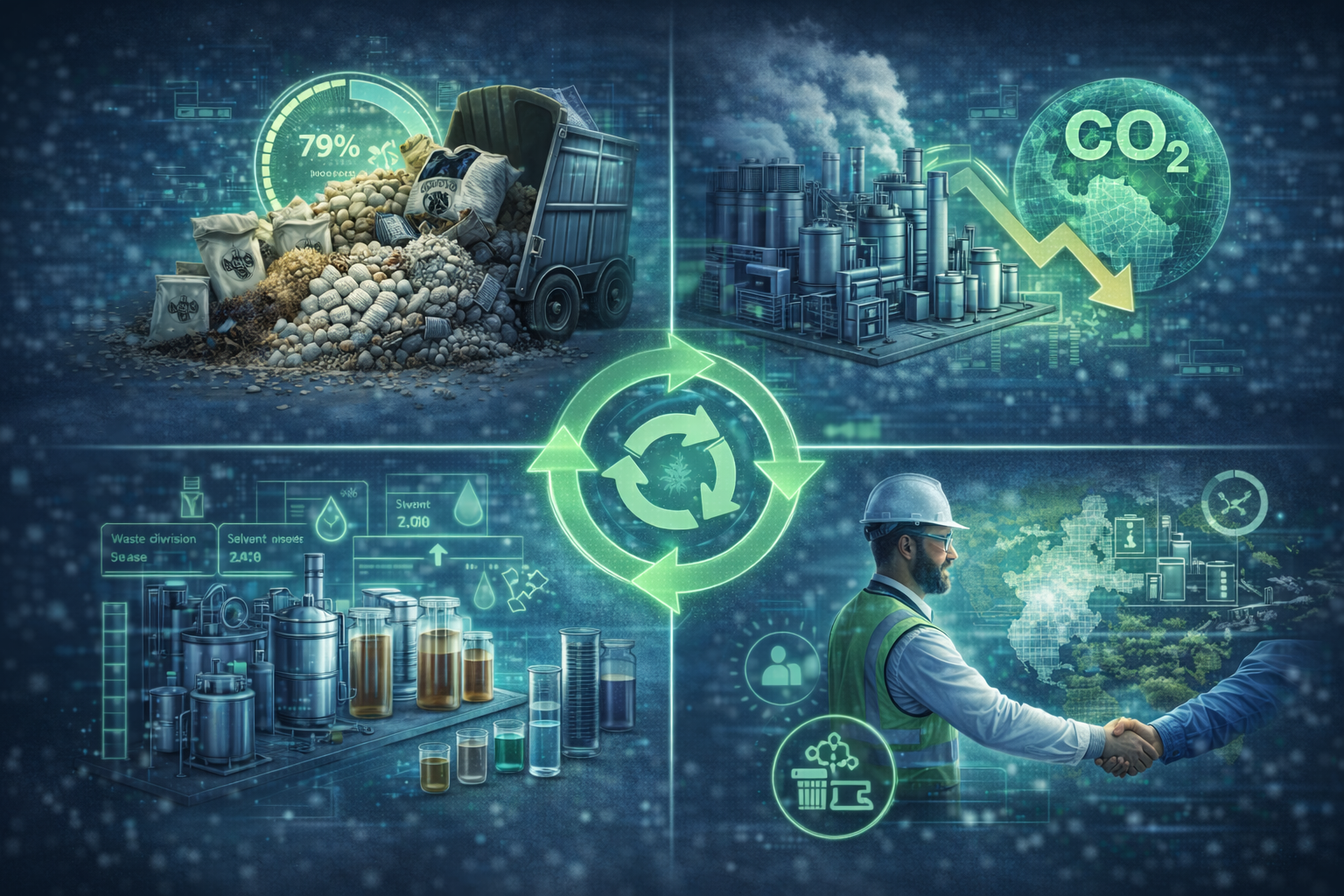
We track impact with auditable, cradle-to-gate metrics—quantifying waste diversion and valorization, circularity KPIs, and local value creation.

  • Waste diverted (tons) and % valorized
  • Estimated avoided emissions (CO2e) using cradle-to-gate LCA (or LCA-lite), with transparent assumptions
  • Solvent recycle rate, water reuse rate, and effluent intensity per kg product
  • Local value creation: jobs, supplier network development, and regional processing hubs

Alignment with UAE Circular Economy and Green Agenda thinking

Our operating philosophy mirrors the UAE’s focus on Sustainable Consumption and Production and the transition to a regenerative circular economy. We aim to do more and better with less by improving resource efficiency, unlocking value in waste streams, and accelerating the transition through digital innovation – consistent with the UAE Circular Economy Policy 2021-2031 and Green Agenda 2030 priorities.
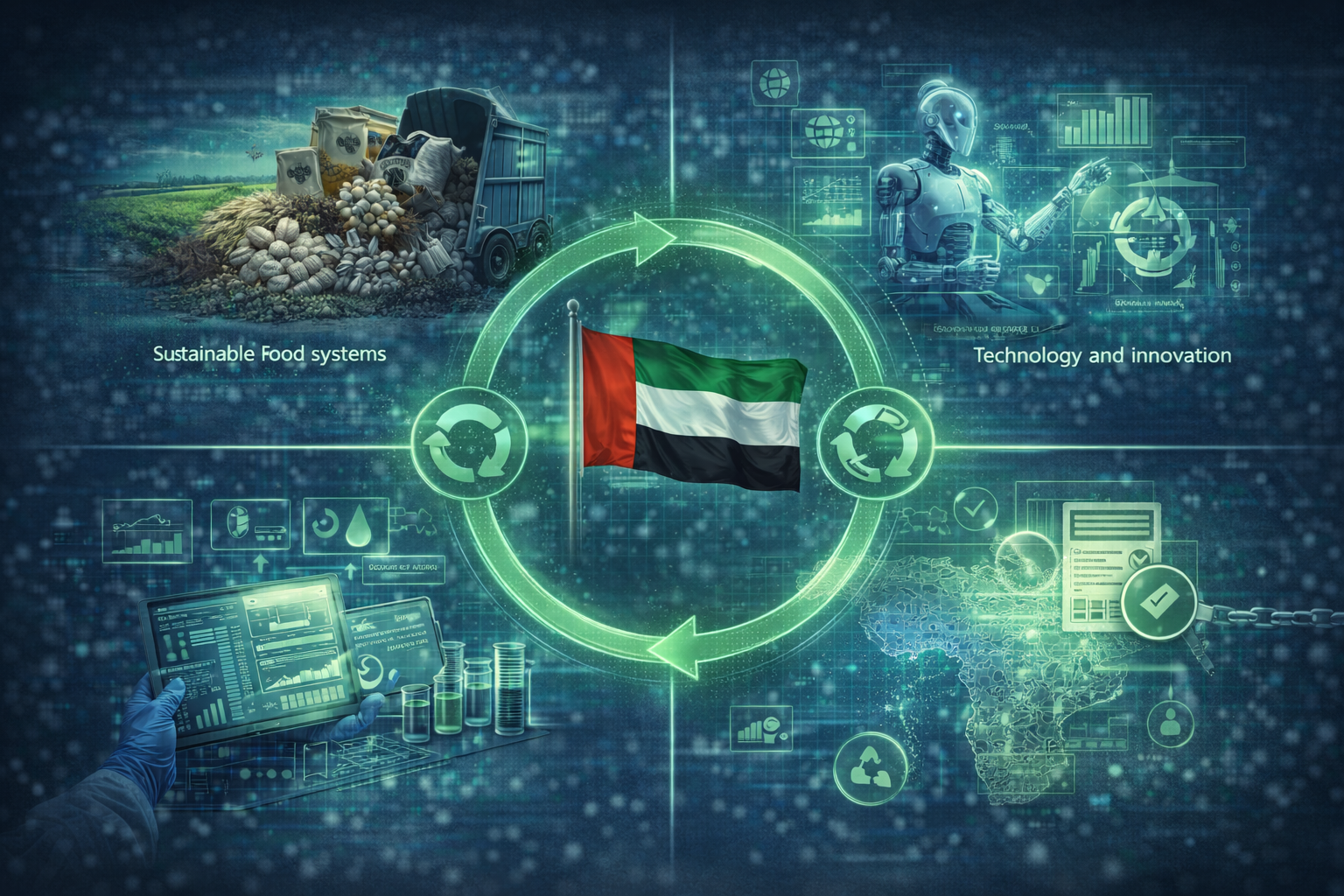
  • Priority-sector fit: sustainable manufacturing (bio-based materials) and sustainable food systems (valorization of organic residues into regenerative inputs).
  • Data-first execution: gather material-flow data, run life-cycle thinking (LCA / LCA-lite), and publish decision-grade circularity KPIs.
  • Technology and innovation: apply R&D, AI, and digital modelling to improve yields, lower emissions, and close solvent/water loops.
  • Circular procurement readiness: provide traceability and documentation that helps customers meet sustainable procurement goals.
chatgpt image jan 30, 2026, 12 17 47 am