Platform

Regenerative biorefining—engineered for scale
chatgpt biorefinery 20260122

How we are built

Renova BioRefinery Platform overview

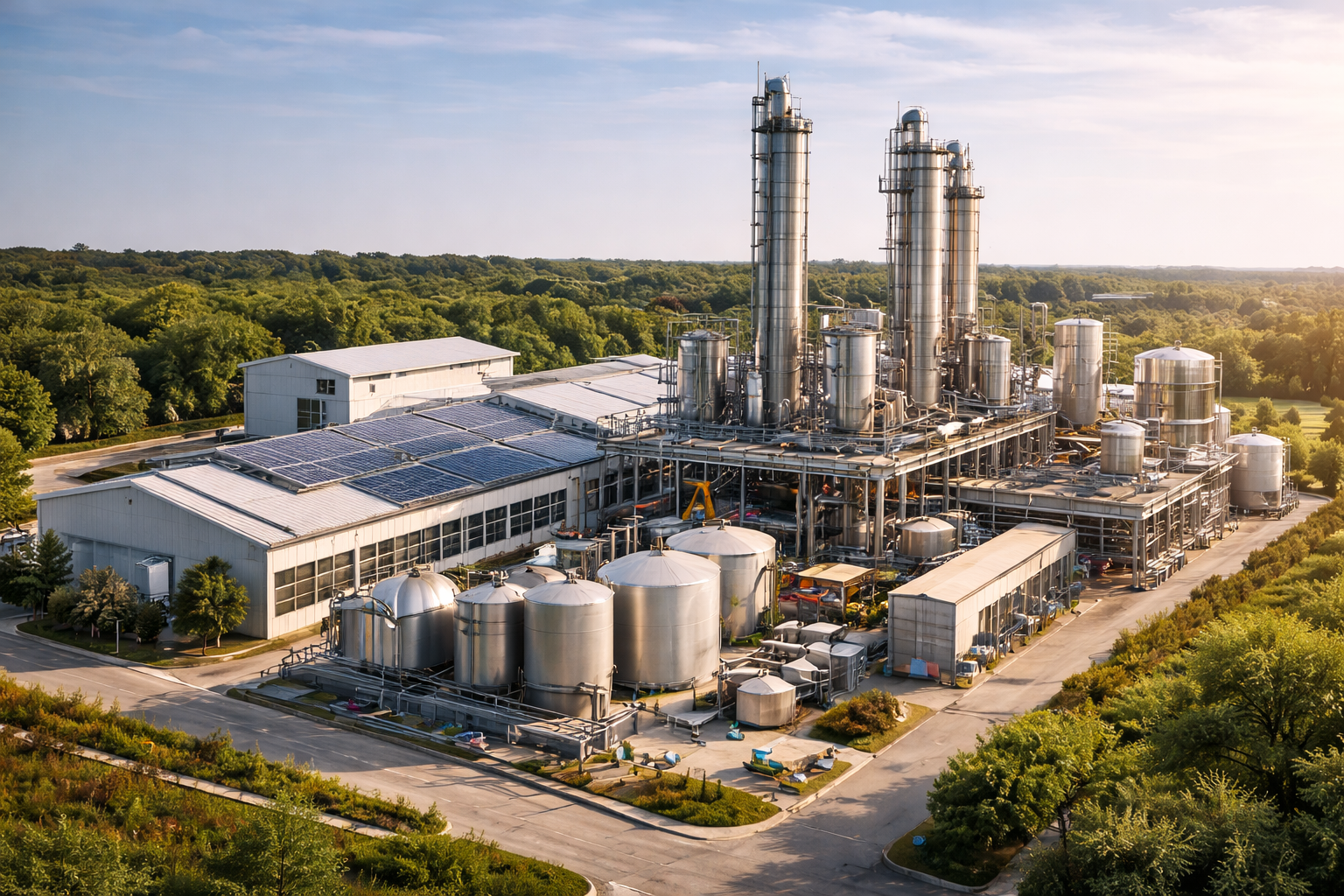
Our platform is built around modular front-end processing for different biomass inputs, paired with a shared downstream purification and recovery backbone. This approach enables faster expansion to new feedstocks while reusing proven unit operations (filtration, separation, polishing, drying) and data systems.

The Renova refining loop

Expertise in chemical engineering and sustainability.
gemini generated image j06t4cj06t4cj06t

1. Source & prepare biomass: collection, preprocessing, and chain-of-custody tagging for traceability
2. Extract target fractions: green solvent systems, enzymatic routes, and selective separations
3. Purify to spec: filtration/centrifugation, precipitation, membrane polishing, adsorption as needed
4. Recover & recycle: solvent recovery, water reuse concepts, and controlled management of salts/effluents
5. Valorize co-products: nutrient-rich streams stabilized for circular agriculture and full utilization

In silico-first process design

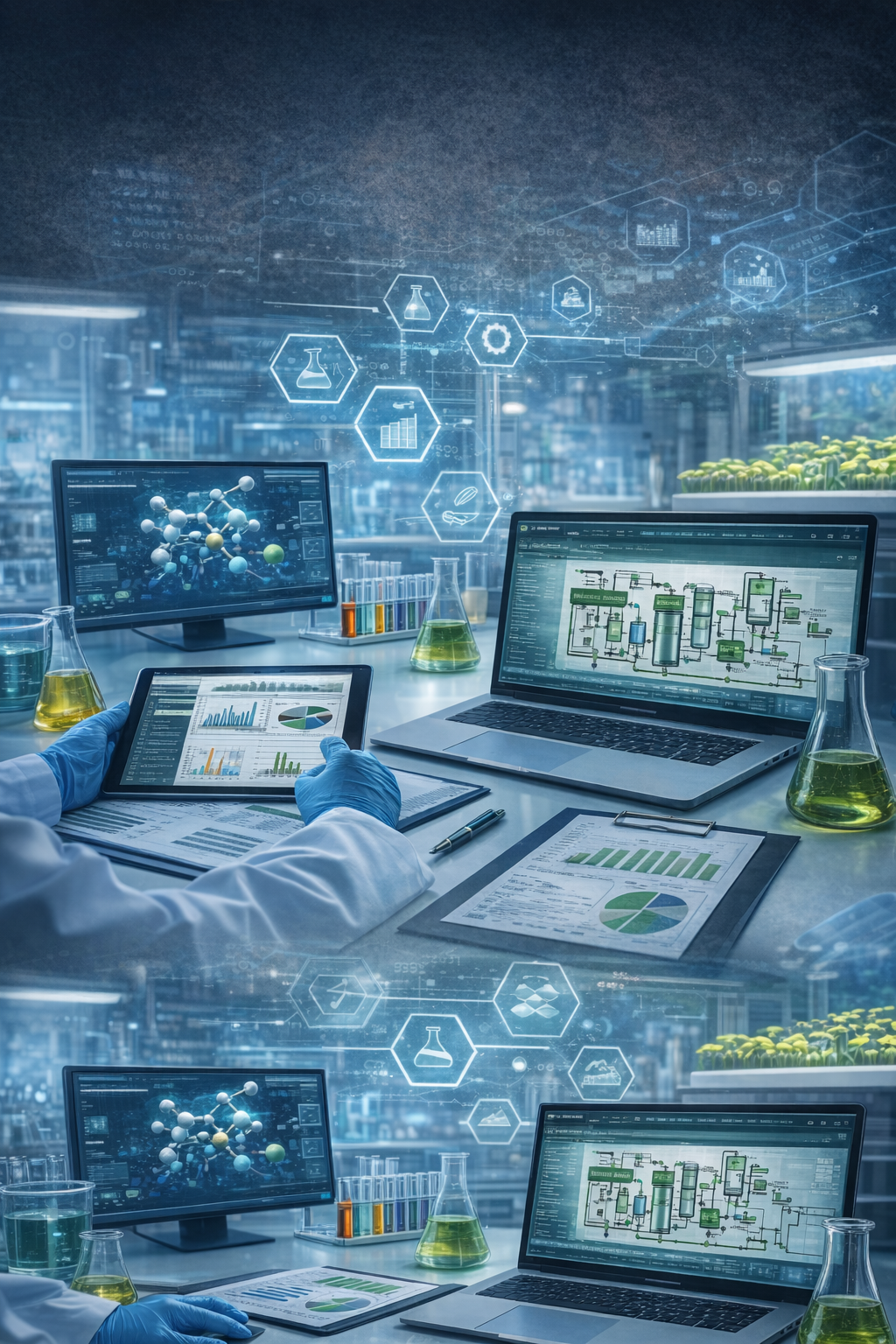
We accelerate development by coupling in silico process design with targeted in vitro validation. This reduces time-to-pilot by focusing lab work on the variables that matter most for yield, purity, recyclability, and unit economics.

  • Build a steady-state process model: unit operations, recycle loops, thermodynamics/ property packages, and mass/energy balances.
  • Run TEA + cash-flow analysis: estimate CapEx/OpEx, minimum selling price (or target transfer price), and sensitivity to market inputs.
  • Run cradle-to-gate LCA: define impact indicators (e.g., GWP 100-year) and quantify CO2e, water, and energy drivers across allocation approaches where relevant.
  • Explore uncertainty and scenarios: Monte Carlo sampling from parameter distributions, sensitivity ranking, comparative route screening, and operational flexibility checks.
  • Validate in vitro: bench-scale experiments to confirm kinetics, separations, solvent recovery, and quality metrics; then update the digital twin and repeat.
chatgpt image jan 29, 2026, 03 16 01 pm

chatgpt image jan 29, 2026, 03 00 34 pm

AI/ML and high-tech software

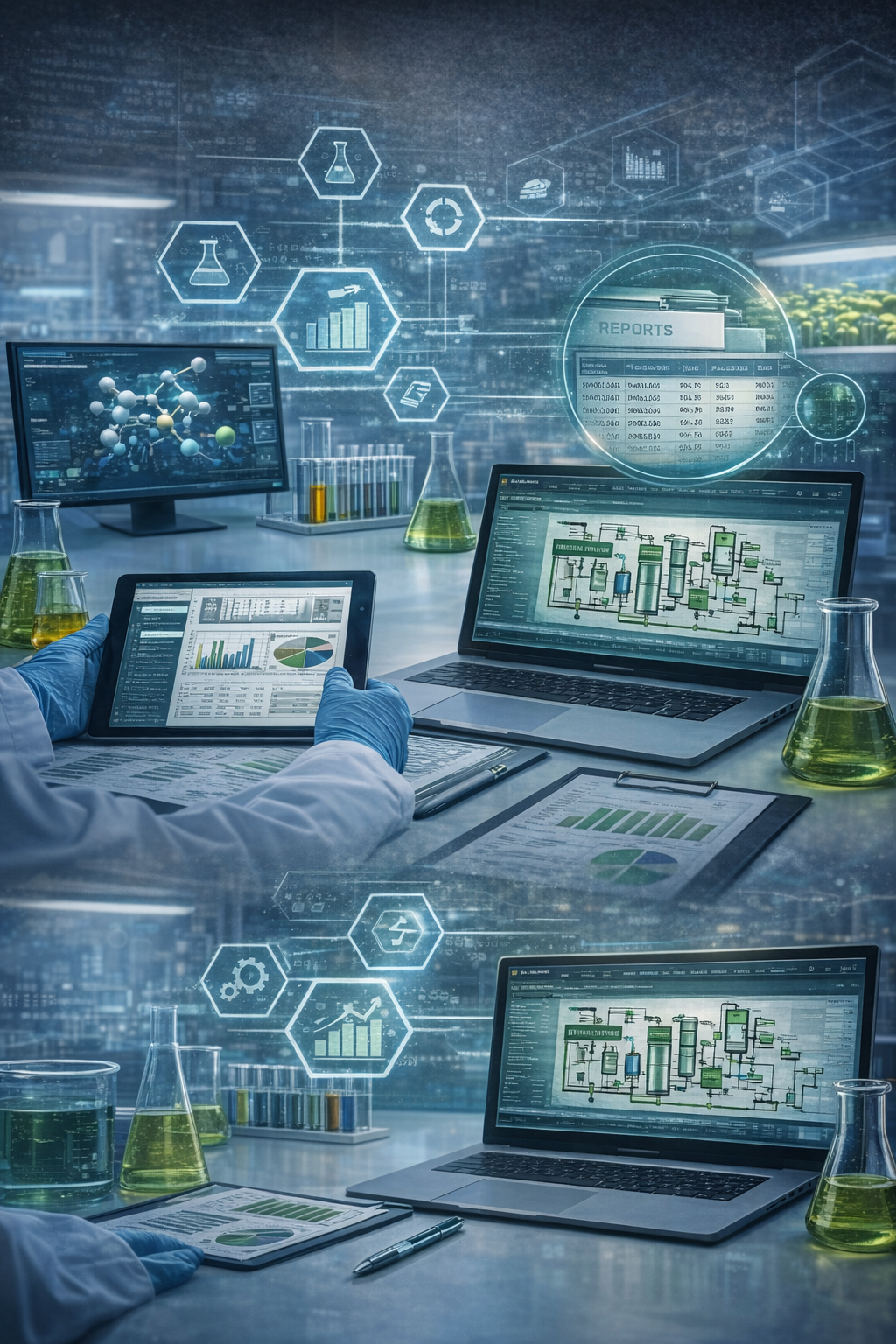
We use an AI-enabled process engineering stack that converts lab runs into scale-ready recipes: DoE + a metadata-rich data lake feed digital-twin simulation, TEA/LCA, and uncertainty analysis to screen routes, define robust operating windows, and guide equipment selection—then statistical/ML optimization and fingerprint-based quality analytics keep yield, purity, and consistency high under feedstock variability.

  • Design of Experiments (DoE): structured experimentation to identify the highest-impact parameters quickly
  • Data lake + metadata: machine-readable run logs (temperature, pH, ratios, time, yields, quality metrics) to support analytics
  • Digital twin models: Python-based steady-state process simulation (BioSTEAM-style) to compare routes, close mass/energy balances, and guide scale-up and equipment selection
  • Techno-economic analysis (TEA): cash-flow modeling, CapEx/OpEx breakdowns, and target pricing to inform go/no-go decisions early
  • Life cycle assessment (LCA): cradle-to-gate impact accounting (e.g., GWP 100-year) to quantify trade-offs and prioritize low-impact routes
  • Uncertainty & sensitivity: Monte Carlo analyses and sensitivity ranking to identify the highest-leverage parameters for improvement
  • Comparative analyses: side-by-side route screening across thousands of scenarios to select robust, financeable process windows
  • Operational flexibility: stress-test feedstock variability and operating ranges to keep quality stable while minimizing waste
  • Optimization workflows: statistical models and ML to maximize yield, purity, and recyclability under safety constraints
  • Quality analytics: spectral and chromatographic fingerprints used for batch-to-batch consistency monitoring

Example data schema fields

Our platform encodes each run as a route-based digital batch record—linking feedstock provenance, exact process conditions, stepwise yields and mass-balance closure, recycle-loop performance, and critical quality metrics—with direct pointers to raw instrument files for end-to-end traceability and scale-ready transfer.
  • Batch ID, origin, preprocessing, and storage conditions
  • Route ID, solvent/reagent system, temperature, time, solid-to-liquid ratio
  • Stepwise yields (dry basis), mass balance closure, and recycle loop performance
  • Key quality metrics (assay %, ash %, residuals, microbial limits where relevant)
  • Links to raw instrument files (UV-Vis, FTIR, HPLC/LC-MS, etc.)
chatgpt image jan 29, 2026, 03 08 07 pm

chatgpt image jan 29, 2026, 03 11 32 pm

Environment, Health & Safety (EHS) by design

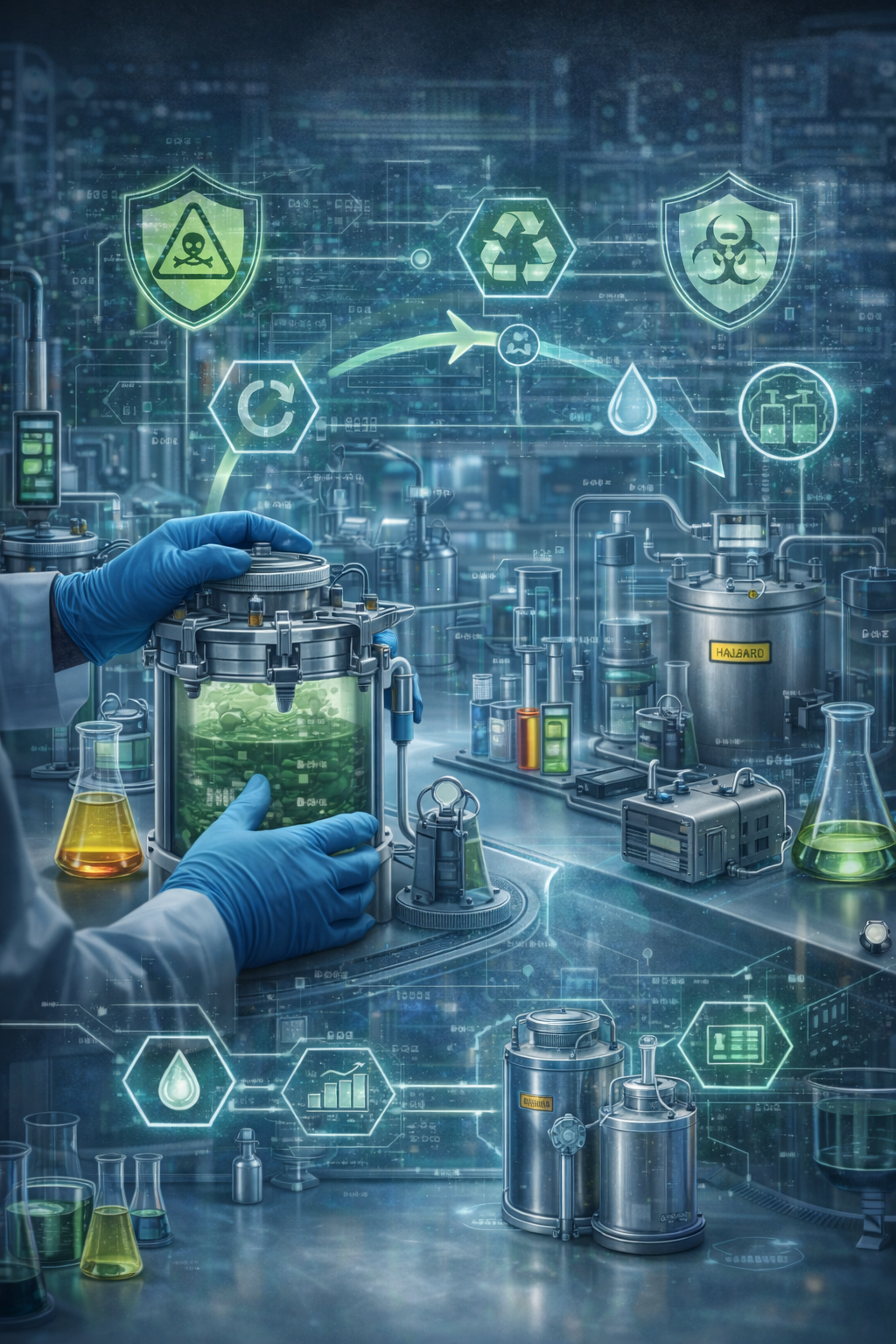
We prioritize routes that are scalable and responsible: safer reagents where feasible, closed-loop handling, early hazard identification (HAZID-lite), and clear waste characterization. Where possible, we design out waste and pollution through solvent recovery, water reuse, and controlled byproduct management – consistent with circular-economy best practice.